

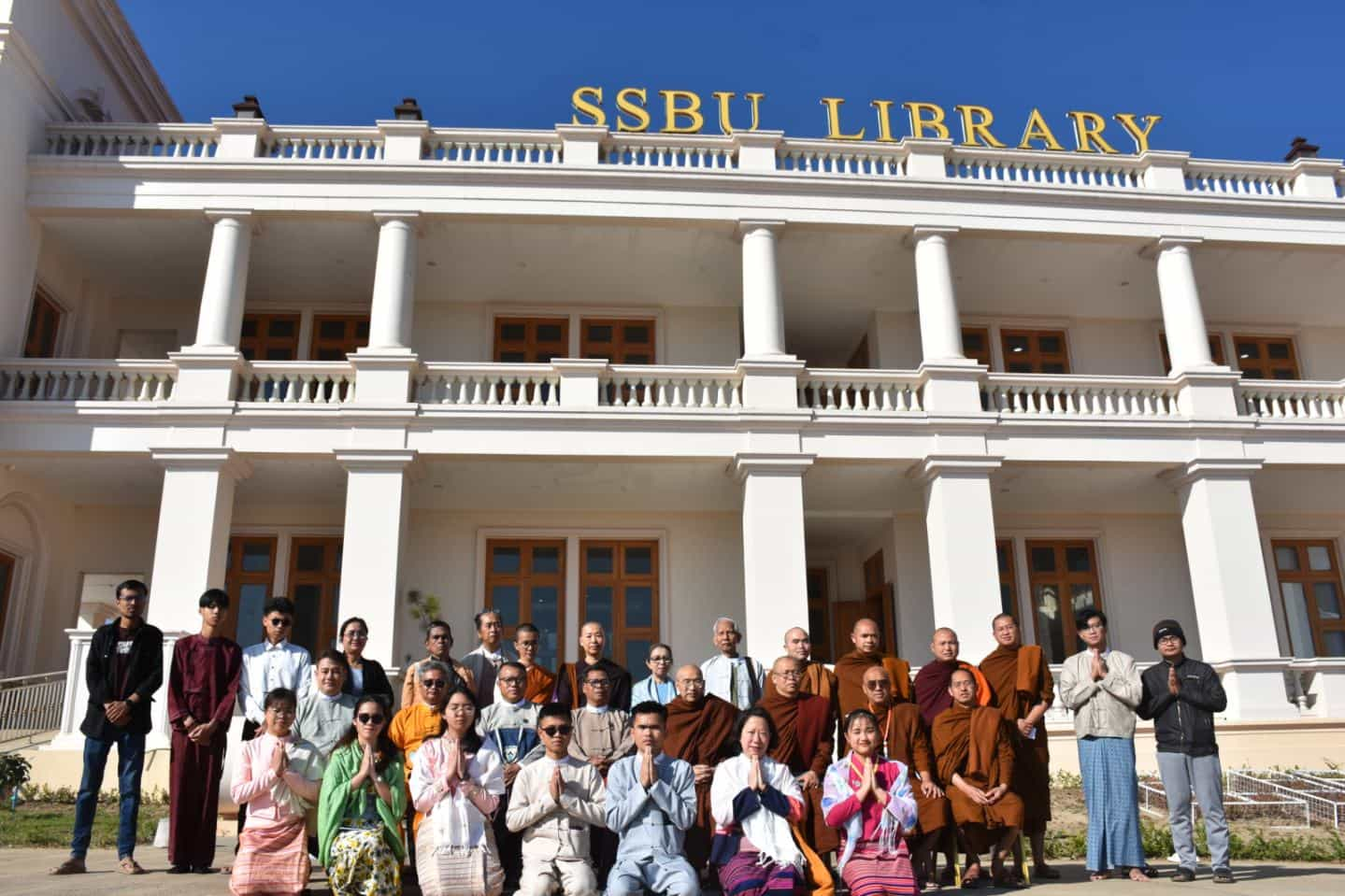
At the Book Donation Ceremony and Seminar held at Shan State Buddhist University (SSBU), Taunggyi, on 23 March 2026, Indian Ambassador Abhay Thakur delivered a formal address highlighting the significance of cultural and academic collaboration between India and Myanmar. The speech is presented here as part of the official record of the event. The content has been reproduced from the original publication of the Embassy of India in Yangon, Myanmar https://embassyofindiayangon.gov.in/listview/NTc3
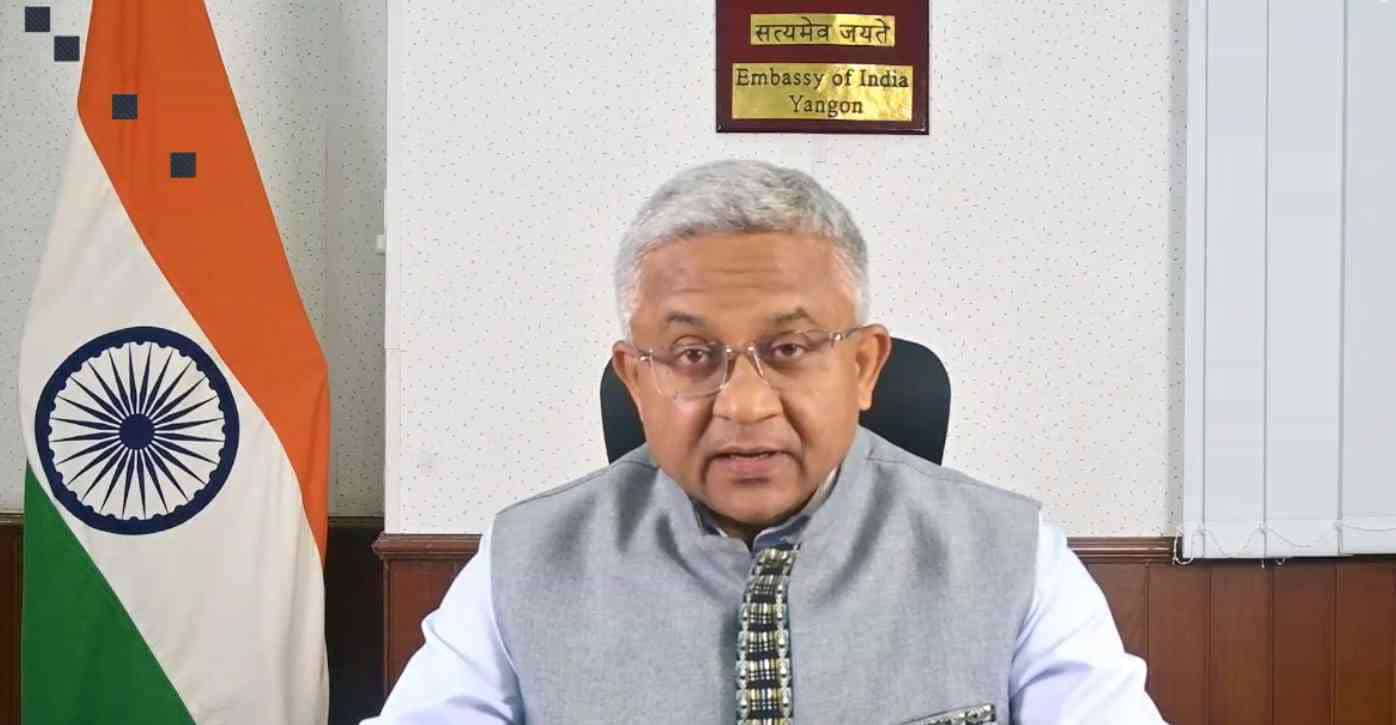
Speech by Ambassador Abhay Thakur at the Book Donation ceremony and Seminar at the Shan State Buddhist University, Taunggyi (23 March 2026)
Most Venerable Oxford Sayadaw, Prof. Dr. Khammai Dhammasami, Founder and Rector of Shan State Buddhist University
Ven. Dr. Pannyabhoga, Dean of Shan State Buddhist University and Director of SSBU Library
Distinguished speakers and guests,
Good morning! Mingalabar!
It is a great honour to me to address today’s book donation ceremony and liberary exhibition at the Shan State Buddihist University, to be followed by a seminar exploring the dimensions of Buddhist culture and literature and its enduring linkages with India. I recall my first visit and conversation at the Shan State Buddhist University in January 2025, when the idea of donation of Buddhism related books was discussed with the Ven. Oxford Sayadaw, and is being brought to fruition today.
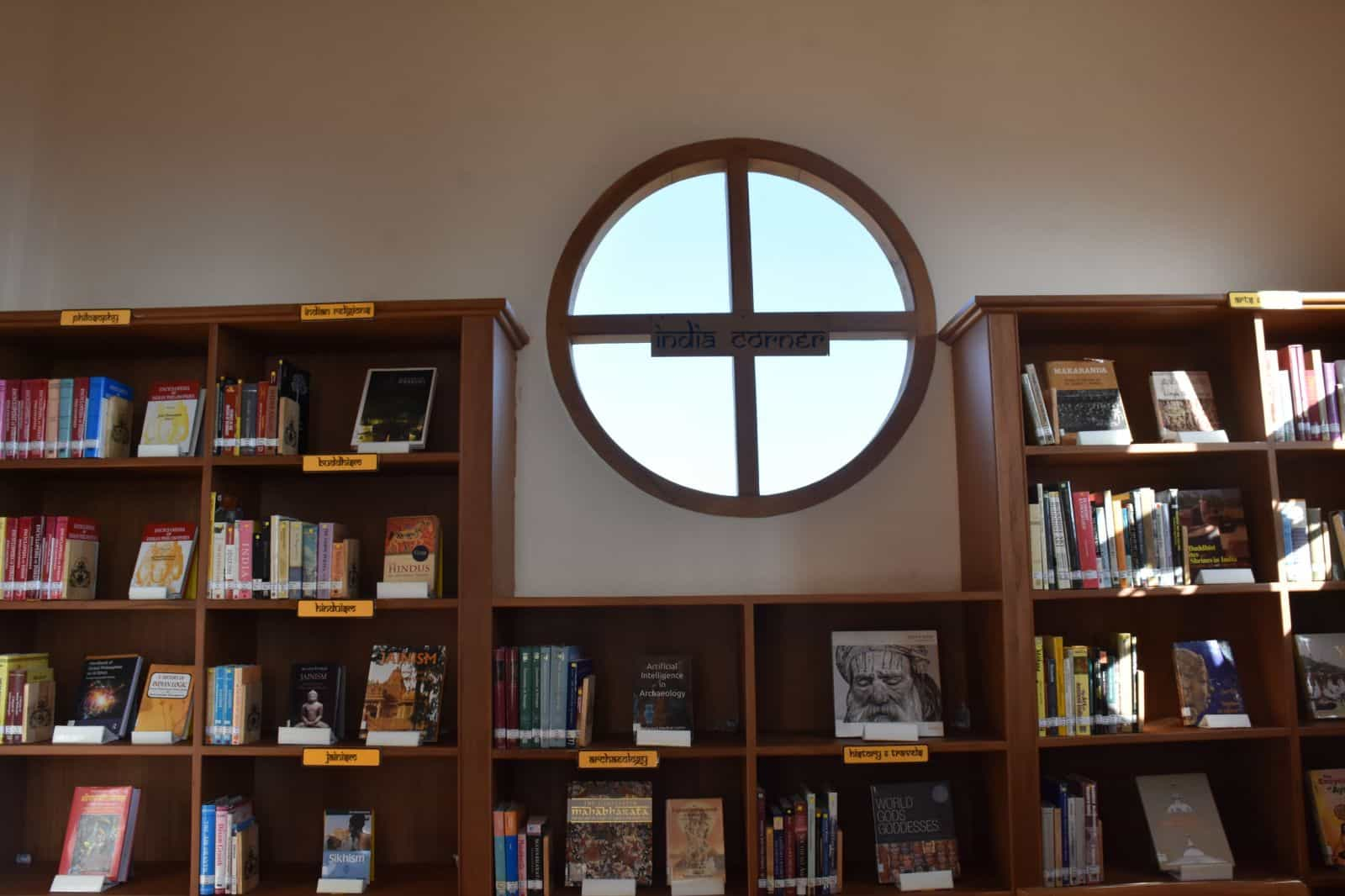
Our Embassy team has been in close touch with the Shan State Buddhist University since last year and we are deeply honored to partner with SSBU to implement this outreach project. We are glad to donate 23 thoughtfully curated collection of books on Buddhist heritage for the SSBU. The books cover a wide range of subjects including AI in archaeology, South East Asia, ancient Pyu cities, splendour or Arakan, Buddhist Stupa architecture, relic worship, tradiotional arts, crafts and textiles, as well as ancient and living Buddhist Literature of Bagan. Today’s seminar brings together eminent scholars presenting a series of insightful topics on a range of works highlighting the cultural connections between both our countries.
India and Myanmar are civilizational partners bound by geography, culture, and a shared spiritual heritage rooted in the teachings of Lord Buddha. For centuries, the sacred Dhamma spread from its origins in India to Myanmar, where it has been practiced and enriched, while also carrying with it the Pali language and literature. This spiritual connect remains one of the strongest pillars of our bilateral relationship.
From the ancient kingdoms of Myanmar to the sacred sites of Bodh Gaya and Sarnath, our shared Buddhist heritage continues to inspire millions. The monasteries, pagodas, inscriptions, and traditions across Myanmar reflect deep civilizational ties with India particulary Theravada Buddhism, preserved disseminated by Myanmar’s monastic institutions.
India has always stood with Myanmar thorugh thick and thin, including providing timely relief and restoring damaged monuments after natural disasters such as in Bagan, with restoration work undertaken with the expertise of the Archaeological Survey of India. In recent decades, India has strengthened this cultural partnership. Earlier this month we inaugurated the Sarsobeikman Literary Centre in Yangon to support the conservation and study of classical and folk literature of Myanmar, as well as scholarly exchanges, which will make Myanmar’s literary heritage accessible to the newer generations and to wider audiences.
Distinguished Guests,
In intellectual and spiritual domains, over the last year, India has been privileged to host esteemed Sayadaw Bhaddanta Kovida, Vice Chairman of State Sangha Maha Nayaka Committee at the 9th Dharma Dhamma Conference in Ahmedabad in September 2025, as well as Daw Nu Mra Zan Myanmar’s Deputy Minister of Religious Affairs and Culture at the 2nd Global Buddhist Summit in New Delhi in January 2026. These interaction underscored our shared commitment to fostering harmony and mutual understanding through the universal message of the Buddha.
Not only have the Buddhist institutions, monasteries, monks and people of Myanmar forged close spiritual ties with India, they have significantly created attractive holy replicas of Buddhist sites including Bodh Gaya, Sarnath, Lumbini, Shravasti and Kushinagar, called Bodh Gaya complexes or parks, across various cities in Myanmar, including Naypyitaw, Kyaing Tong, near the Mekong river in Tachilek and Bagan. These complexes also showcase the Sarnath pillar, with the Lion capital that has inspired India’s State Emblem on top, and resonate deeply with both sides.
Education and capacity building also remain central to our engagement. Institutions such as Nalanda University and ICCR are offering a range of scholarships to students from Myanmar. In this context, I would in particular like to suggest interested students and and applicants to visit the Nalanada university portal https://online.nalandauniv.edu.in/ and ICCR admission portal called A2A portal http://a2ascholarships.iccr.gov.in both of which are live and active until 15 June 2026 and 15 April 2026 respectively. We have also put this information on our Facebook page IndiaInMyanmar (Embassy of India, Yangon).
Beyond Buddhism and spirituality, our bilateral relations today encompass a wide spectrum from connectivity, trade, capacity building and people-to-people exchanges. Projects such as the Kaladan Multi-Modal Transit Transport Project and the India–Myanmar–Thailand Trilateral Highway are pathways of progress, linking our peoples and economies more closely.
Distinguished Guests,
In conclusion, let me affirm that India–Myanmar partnership stands as a living bridge of shared heritage and culture. I am confident that this enduring friendship rooted in history and culture will continue to flourish in the years ahead. I would in particular like to thank Ven Oxford Sayadaw, who is highly erudite and exceptionally knowledgeable, and without whose dynamic leadership, guidance and blessings, today’s seminar and donation of books would not have been possible. I also thank the Dean, faculty members and all colleagues from the Shan State Buddhist University for their valuable contribution to today’s event and interaction. I would like to place on record my deep appreciation to the representatives of the Ministry of Religious Affairs and Culture for their contributions to today’s seminar and their support, as well as representatives of the Yangon University for their participation. Once again, please accept my deepest respect and gratitude to Ven. Oxford Sayadaw for his blessings.
Thank you. Chezu ten parey.