
Special Lecture
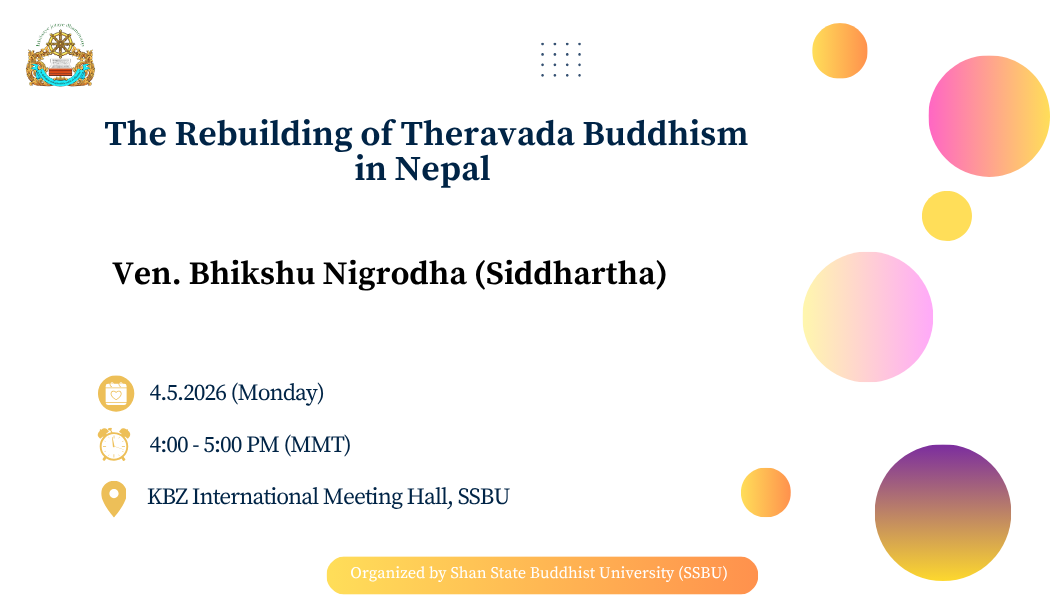
The Rebuilding of Theravada Buddhism in Nepal
A 20th Century Revival Movement: From Ancient Origins to Modern Revival
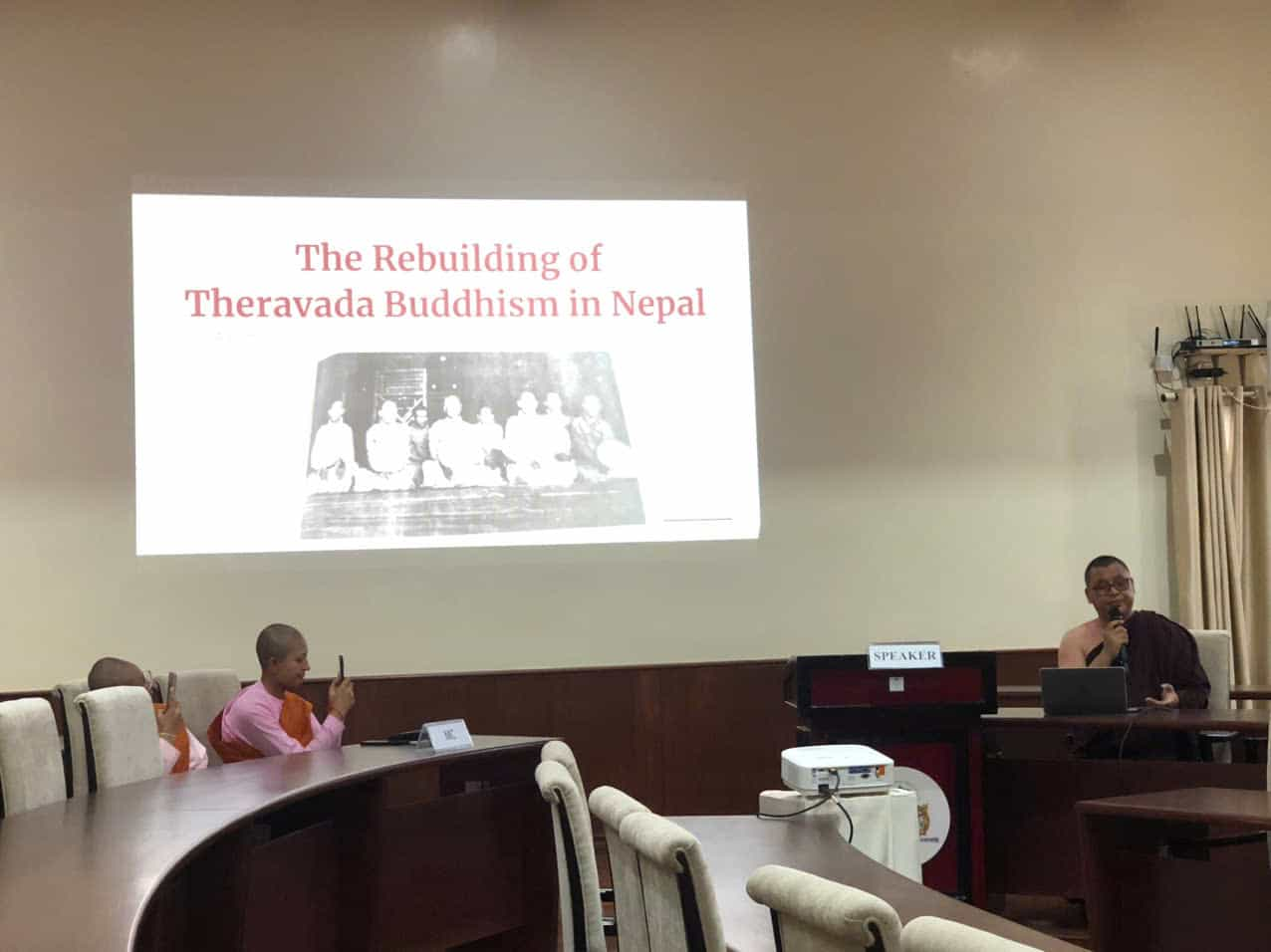
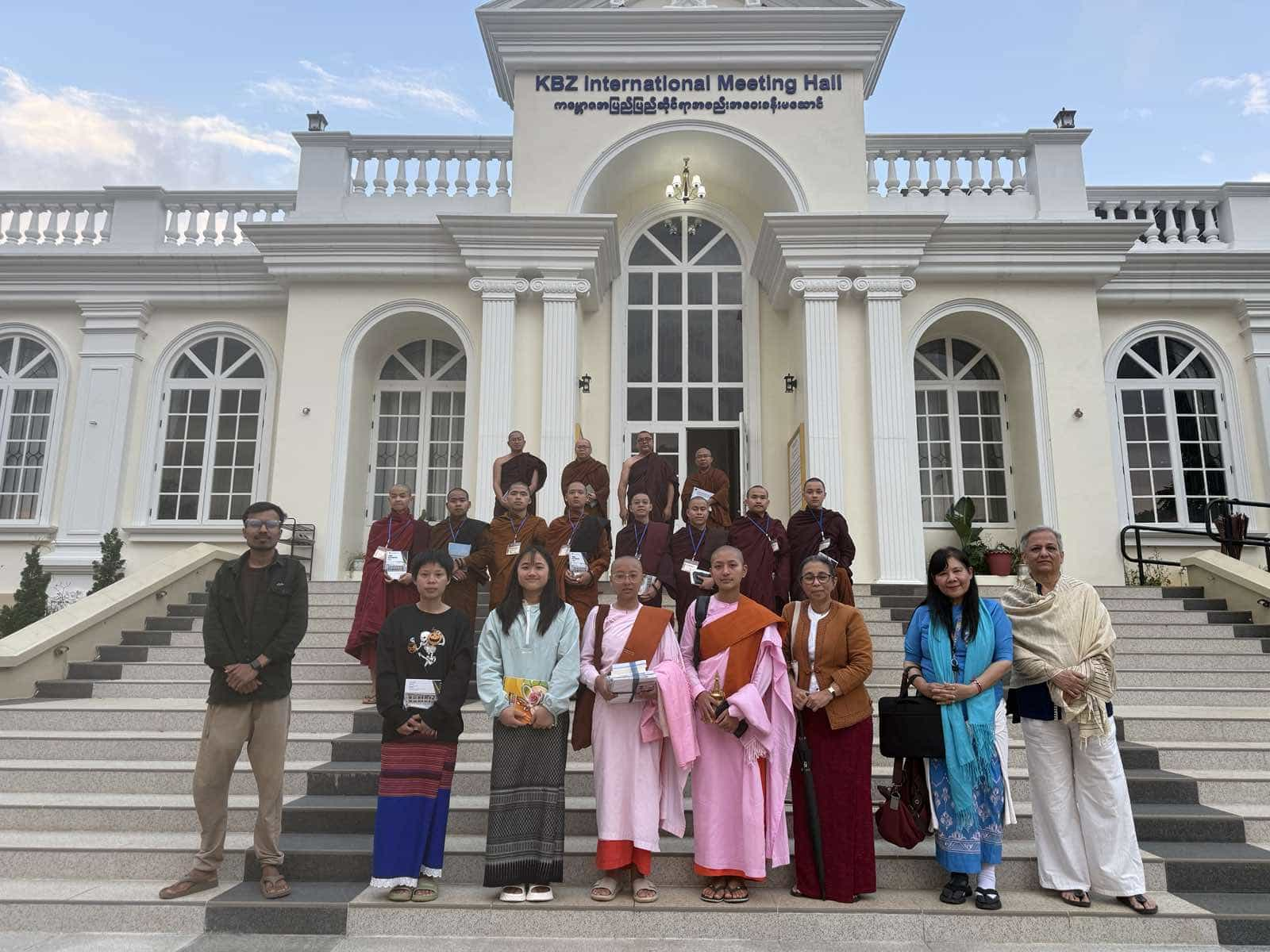
On 4 May 2026, Shan State Buddhist University (SSBU) hosted a special lecture delivered by Ven. Bhikshu Nigrodha (Siddhartha) at the KBZ International Meeting Hall. The lecture, entitled “The Rebuilding of Theravada Buddhism in Nepal – A 20th Century Revival Movement: From Ancient Origins to Modern Revival,” was attended by lecturers, faculty members, and students. Ven. Bhikshu Nigrodha, who served as Director and Chair of the Theravada Buddhist Academy in Nepal, as well as Principal and Abbot of the World Peace Temple, presented a historically grounded account of the development, decline, and modern revitalization of Theravāda Buddhism in Nepal.
The lecture began with an overview of the early historical foundations of Buddhism in Nepal. Theravāda Buddhism was traced back to the time of Shakyamuni Buddha in the sixth century BCE, with the conversion of the Shakya clan suggesting an early introduction of the teachings. During the Lichchhavi period, approximately from the fifth to seventh centuries CE, Buddhism flourished under royal patronage, with evidence of established monastic communities, including both monks and nuns. This period was identified as a formative era in which the Sangha was institutionally supported and doctrinally active.
The presentation then examined the gradual decline of Theravāda Buddhism beginning in the fourteenth century. The influence of Brahmanical traditions and the introduction of a caste-based social structure significantly altered religious practices. A process of Hindu-Buddhist synthesis led to the incorporation of tantric elements, which affected monastic discipline and doctrinal continuity. While Mahāyāna and Vajrayāna traditions continued to exist, this survival occurred alongside the erosion of Theravāda monasticism and the gradual loss of Pāli textual traditions. By the nineteenth century, Buddhist practice in Nepal had largely become ritualistic, with limited access to canonical teachings.
The lecture highlighted the role of early twentieth-century reformers who initiated the revival of Theravāda Buddhism. Dharmaditya Dharmacharya was identified as a key figure whose efforts were shaped by the influence of Anagarika Dharmapala. His work, supported by the Kathmandu Buddhist community, laid the foundation for renewed interest in Theravāda practice. Nisthananda Vajracharya contributed through the translation of important texts, including the Lalitvistara, into Nepal Bhasa, thereby fostering a broader intellectual engagement with Buddhist literature.
Ven. Bhikshu Nigrodha also addressed the challenges faced during the Rana period, particularly between the 1920s and 1940s. The ruling authorities opposed the revival movement, resulting in the harassment, imprisonment, and exile of monks. These restrictions were linked to resistance against changes in the established religious hierarchy and social order. Despite these obstacles, the movement persisted and reached a turning point with significant milestones, including the visit of Narada Thera from Sri Lanka in 1946 and the restoration of religious freedom following the fall of the Rana regime in 1951.
The role of international support was presented as crucial to the revival process. Monastic ordination lineages were strengthened through connections with Myanmar, particularly through the efforts of U Chandramuni Mahasthavir, who ordained leading Nepalese monks. Sri Lanka and Thailand contributed by providing training, scriptural resources, and institutional guidance. These transnational networks enabled the re-establishment of Theravāda monasticism on a stable foundation.
Following the political changes of 1951, the lecture described the rebuilding phase of Theravāda Buddhism in Nepal. Monasteries such as Ananda Kuti Vihara were established as centres for teaching and practice. Returning monks engaged in the restoration of Pāli-based teachings and the development of monastic communities. Royal support, including that of King Tribhuvan, contributed to the consolidation of these efforts. Key monastic figures, including Mahaprajna, Amritananda, Prajnananda, and Dharmaloka, played central roles in establishing educational institutions, promoting doctrinal study, and expanding the Sangha.
The lecture further discussed the development of pariyatti education and the spread of Vipassanā meditation. Structured systems of doctrinal learning were introduced, while meditation practice expanded beyond the Kathmandu Valley into other regions of Nepal. These developments were presented as complementary aspects of a broader revival, integrating study and practice.
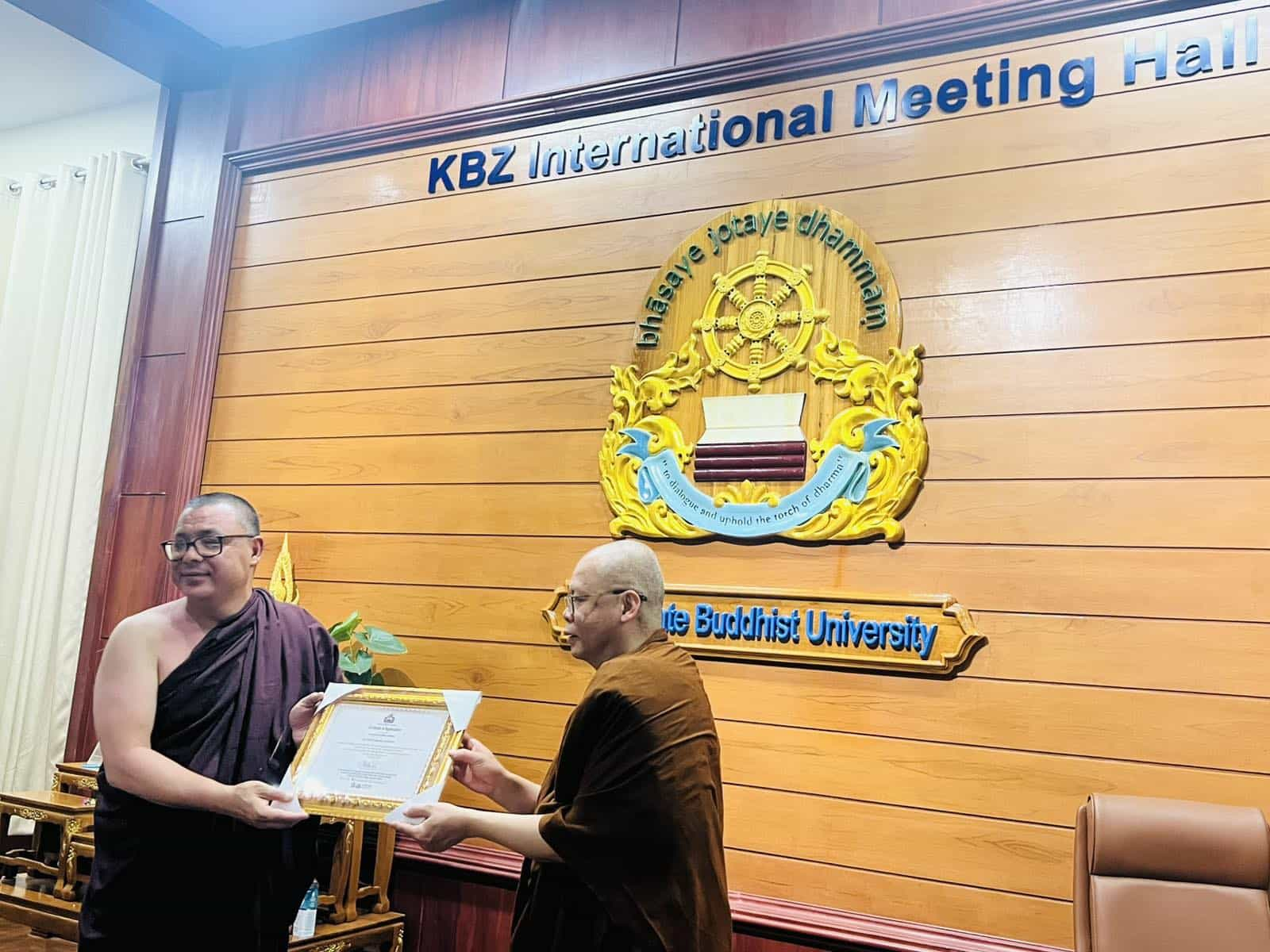
In conclusion, Ven. Bhikshu Nigrodha described contemporary Theravāda Buddhism in Nepal as a dynamic and evolving tradition. The growing number of ordained monks and nuns, the construction of new monasteries, and the coexistence of Theravāda with Vajrayāna and Tibetan Buddhist traditions illustrated a context of religious diversity and interaction. The lecture provided a comprehensive historical and analytical account of the revival movement, situating it within both regional and international frameworks of Buddhist development.